
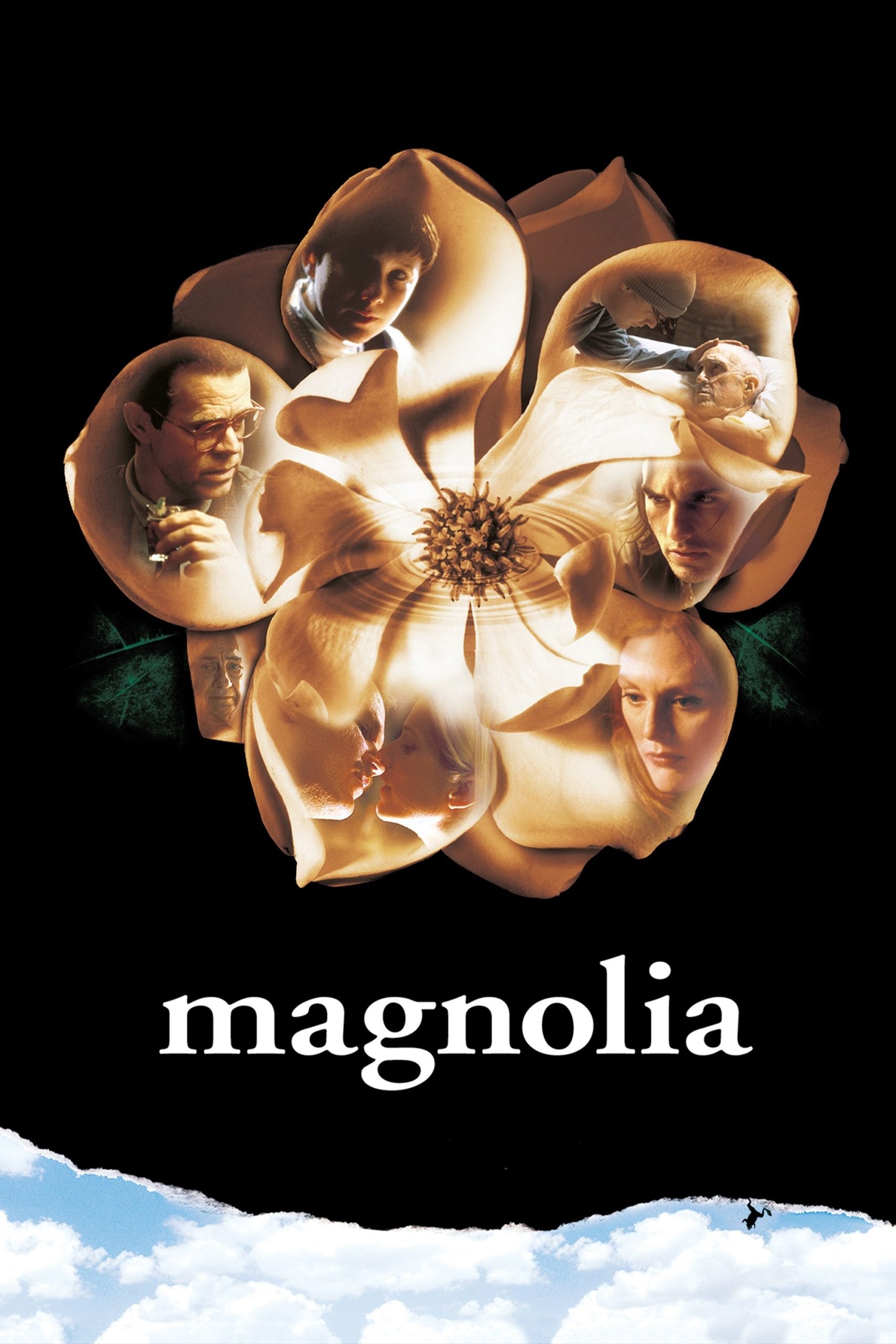
It’s not often that a movie infiltrates my thoughts in the uneasy, lingering way Magnolia does. I remember the first time I watched it, many years ago—I was young enough to find its randomness overwhelming, but old enough to recognize the pulse of agony and longing at its core. There’s a feeling I get—still, after all these viewings—that I’m witnessing not just a story, but an experience of chance and consequence that feels frighteningly close to how real life topples into chaos.
The Twisting Orbits of Human Suffering
For me, what gives Magnolia its particular power is the way it orchestrates a symphony of emotional despair, regret, and fleeting hope. Rather than tracking a singular protagonist or conflict, the film juggles a constellation of intersecting lives over the course of a single day in the San Fernando Valley. These characters—lost children, abusive parents, the terminally ill, lonely quiz kids, and desperate romantics—all seem to share a collective ache shaped by old secrets and unresolved wounds.
What stands out isn’t so much what the characters do as how they carry their burdens. Everyone is seeking some kind of redemption or release, gripping tightly to the possibility that forgiveness, luck, or even a miraculous act might free them from pain. The tension resides not in the external stakes, but in the internal struggle to find connection, even as the universe seems intent on punishing the guilty and innocent alike. I recognize in these arcs a raw portrait of how shame, estrangement, and yearning can spiral into episodes of self-destruction—or, sometimes, unexpected grace.
Tracing the Thread: Forgiveness, Chance, and Cycles of Pain
Magnolia is propelled by the theme of intergenerational pain and the desperate yearning for forgiveness. Watching those stories play out simultaneously—children confronting a legacy of emotional neglect, adults unable to atone for past sins—I find an emotional thread that feels universally urgent, even now. The question that haunted me after seeing the film for the first time rings just as loudly today: Is genuine forgiveness possible, or are we doomed to inherit and repeat the mistakes of our parents?
When I consider the film’s historical context, 1999 was a year perched at the edge of a millennium—a time of speculative anxiety and cultural reassessment. There’s a nervous energy in the film that matches the turn-of-the-century mood, with its anxieties about what we owe each other and the unpredictable nature of fate. But even now, the notion that “we may be through with the past, but the past ain’t through with us” echoes with renewed relevance, as cycles of trauma and longing for redemption still define so much of our cultural conversation.
Rain Frogs and Game Shows: Unpacking the Film’s Icons
No other film that I can recall uses its symbolism with such direct, even audacious, confidence. The most notorious symbol—the rainfall of frogs—functions as both a biblical portent and a representation of inexplicable cosmic chaos. The event itself is absurd, glorious, and terrifying, reminding me just how powerless we are when confronted with forces outside comprehension or control.
Throughout the film, recurring motifs of coincidence (the number 82, biblical references, TV screens in every room) reinforce the idea of an interconnected universe, one where lives touch each other in ways that are as random as they are significant. The persistent presence of weather reports and the children’s game show set up a world structured around chance, rules, and the hope for a big win—a metaphor, perhaps, for how all of us are playing games with fate.
Even the use of music, particularly Aimee Mann’s songs threading through the arcs, heightens the sense that the characters are caught in loops they can’t quite escape but always feel deeply. To me, these motifs transform Magnolia from a soap opera to a living, breathing mural of fate and mercy.
Moments That Reshape Everything
A Quiet Confession in a Hospital Room
In my view, one of the film’s most devastating moments is when Earl Partridge (Jason Robards) lies dying, confessing regret for the pain he inflicted on his estranged son. The camera hovers, merciless and compassionate, while Tom Cruise’s Frank Mackey crumbles, unable to reconcile his public persona with his personal agony. This scene distills Magnolia’s obsession with the impossibility of real closure, serving as a heartbreaking plea for acceptance that is rarely granted in life.
The Rain of Frogs: Miracles and Mayhem
The infamous sequence when hundreds of frogs cascade from the sky stands as perhaps the boldest act of surrealism I’ve ever seen in American cinema. The effect is twofold: it’s both a punchline and a reckoning, an event so improbable that it forces every character (and viewer) to pause and confront the randomness of suffering and salvation alike. I read it as the film giving up on rationality—and in so doing, granting possibility to lost souls who can’t help but hope for the impossible.
Solitary Singing: The Failed Chorus
A third moment haunts me every time: the sequence where each character, isolated in their misery, sings along to Aimee Mann’s “Wise Up”. The montage is deeply personal—I see in it the desperate acknowledgment that, despite our solitary struggles, we’re united through pain. No one can “wise up” alone, yet the film makes clear how rarely these interconnected souls are able to ask for help and truly receive it.
Outside Views and My Own
Many critics interpret Magnolia as an exploration of coincidence, the randomness of life, and the karmic consequences of our actions. Roger Ebert famously saw it as a display of “emotional weather,” where the storms between characters mirror the literal weather calamity in the narrative. Others argue that the film is ultimately hopeful, emphasizing the possibility of forgiveness and rebirth.
While I appreciate these readings, they miss, for me, the unyielding loneliness at the core of the movie. Magnolia isn’t just about connection—it’s about the agony of trying and failing to be seen, to have one’s pain acknowledged without platitude or resolution. I admire the film’s ambition to suggest grace is always just outside our grasp, but it’s the unforgettable ache of what we can’t let go that brings me back, again and again, to watch these characters try.
Cinematic Kindred Spirits
- Short Cuts (1993) – Like Magnolia, Robert Altman’s ensemble drama interweaves the lives of multiple Los Angeles residents, exposing cycles of regret, loss, and tenuous redemption.
- A Serious Man (2009) – The Coen brothers’ darkly comic meditation on fate and suffering explores the cruelty of the inexplicable, mirroring Magnolia’s sense of cosmic uncertainty.
- Crash (2004) – This film uses chance encounters and interconnected narratives to scrutinize human flaws and the potential for both harm and healing in random intersections.
- The Sweet Hereafter (1997) – Atom Egoyan’s meditation on trauma and communal grief echoes Magnolia’s concern with how individuals and societies carry and respond to unspeakable loss.
Final Thoughts: Why Magnolia Endures
For anyone encountering Magnolia for the first time, I’d urge them to embrace its messiness and contradictions. The film invites confrontation—with our mistakes, with the randomness of suffering, and with the hope that forgiveness, however imperfect, is possible. Understanding its themes won’t make the experience comfortable, but it will make it more honest and resonant. I believe this honesty is why, decades later, the film’s questions still refuse to resolve, and why they’re worth wrestling with.
Related Reviews
If you found value in my perspective, you might also enjoy exploring my thoughts on other cinematic landmarks such as Short Cuts and The Sweet Hereafter.
To broaden this interpretation, you may also explore how critics and audiences responded over time.
🎬 Check out today's best-selling movies on Amazon!
View Deals on Amazon